
How to Care for Silk Accessories | Luxury Silk Care Guide

Silk is often described as ‘delicate,’ but this is a misnomer. A filament of silk is stronger than a filament of steel of the same diameter. However, while it is mechanically strong, it is chemically reactive. To properly care for silk accessories is not about babying them; it is about understanding their biology.
Silk is a protein fiber, fundamentally similar to human hair or skin. It breathes, it reacts to acidity, and it degrades under UV radiation. The reason most silk gets ruined is not because it is fragile, but because it is treated like cotton or polyester.
At Asyii, we want your high quality silk accessories to be heirloom pieces, not disposable fashion. This technical guide will move beyond the basic ‘hand wash cold’ instruction label and delve into the chemistry of maintenance, ensuring your investment retains its luster for decades.
The Chemistry of Washing: Why pH Matters
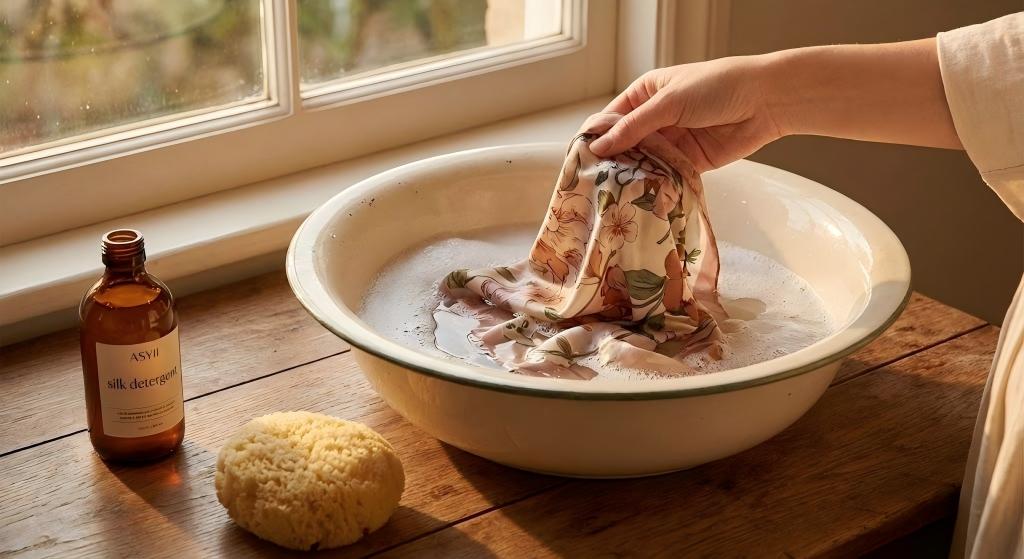
The number one enemy of silk is alkalinity. Standard laundry detergents contain enzymes (proteases) designed to break down biological stains like food or sweat. Unfortunately, because silk is also a biological protein, these enzymes attack the silk fiber itself, eating away at the sheen and leaving it dull and brittle.
The Golden Rule: pH Neutrality
You must use a detergent specifically formulated for silk or wool (pH neutral). Do not use shampoo (often contains waxes) or body wash (often contains moisturizers). A dedicated silk wash preserves the structural integrity of the amino acid chains. This is crucial for silk scarf care, where the sheen is the primary aesthetic feature.
The pH Spectrum Table below illustrates why your choice of soap is non-negotiable:
| Substance | pH Level | Effect on Silk Protein |
| Bleach | 11-13 (High Alkaline) | Dissolves Fibers (Immediate Damage) |
| Standard Detergent | 9-10 (Alkaline) | Hardens/Dulls Sheen (Cumulative Damage) |
| Human Skin/Silk | 5.0-6.0 (Slightly Acidic) | Neutral/Safe |
| Silk-Specific Wash | 6.5-7.5 (Neutral) | Preserves Amino Acids (Ideal) |
| Vinegar Rinse | 2-3 (Acidic) | Restores Luster (Use diluted) |
Hydro-Mechanics: Handling Silk When Wet
Silk loses approximately 20% of its tensile strength when wet. The water molecules penetrate the fiber structure, causing the chains to swell and loosen. In this state, the fabric is extremely vulnerable to mechanical distortion.
Protocol A: The ‘No Wring’ Law
Never, under any circumstances, wring or twist a wet silk item. Twisting wet silk breaks the fibers, resulting in permanent ‘white creases’ or fractures in the dye. This is especially important for elasticated items like in silk scrunchie care, where twisting can also damage the inner elastic core.
Protocol B: The Towel Roll Method
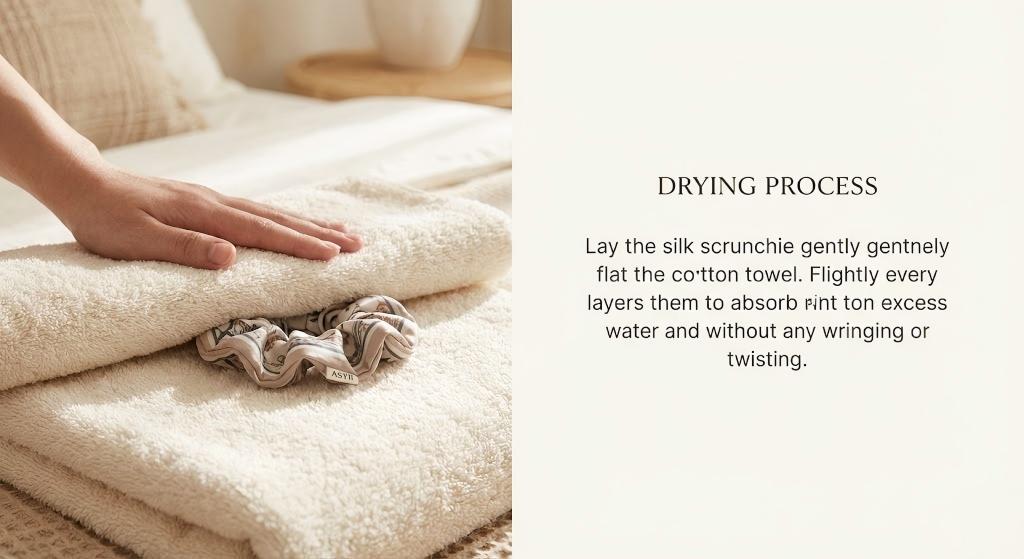
To remove excess water, lay the wet silk flat on a clean, white cotton towel. Roll the towel up like a sleeping bag with the silk inside. Gently press (do not wring) the towel. The cotton will wick the moisture away from the silk via capillary action without stressing the silk fibers.
Thermal Dynamics: Ironing and Steaming
Protein fibers denature (cook) at high temperatures. Just as hair burns under a hot straightener, silk scorches under a hot iron.
Steaming vs. Ironing
Steaming is always safer than ironing. The moisture in the steam relaxes the fibers, allowing gravity to pull the wrinkles out. If you must iron, turn the item inside out (iron the matte side) and use the lowest setting. Always keep the iron moving. A stationary iron can scorch silk in less than 2 seconds.
Storage Engineering: Controlling the Environment
How you store your Asyii Silk Collection is just as important as how you wash it. Silk is a natural fiber, meaning it is biodegradable—and tasty to moth larvae.
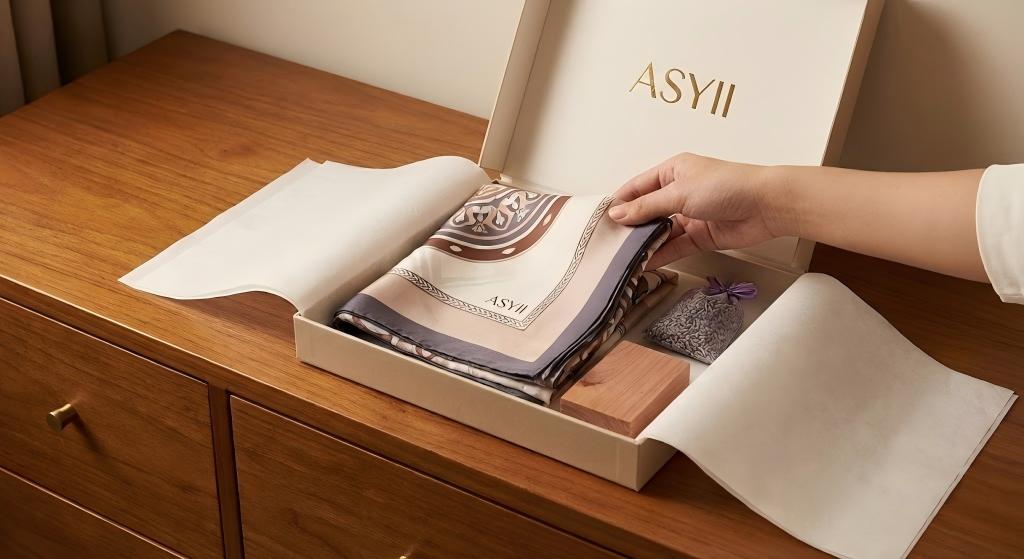
1. Oxygen Flow: Never store silk in sealed plastic bags. Plastic traps moisture, leading to yellowing and mildew. Use breathable cotton dust bags or acid-free tissue paper.
2. The UV Factor: Direct sunlight acts as a bleach on silk dyes and degrades the fiber strength (photolysis). Store silk in a dark drawer or closet, away from windows.
3. The Knot Check: Never put a scarf away while it is still knotted. The stress on the fibers will become permanent over time. Always untie, unroll, and fold flat.
Emergency Stain Protocols
Accidents happen. Your reaction time and method determine if the stain is permanent.
• Oil/Grease (Makeup, Salad Dressing): Do not use water (oil and water don’t mix). Apply a small amount of talcum powder or cornstarch to the spot to absorb the oil. Let it sit for an hour, then brush off.
• Tannins (Wine, Coffee): Rinse immediately with cool water. Do not rub. Rubbing exfoliates the fiber, causing a fuzzy white spot called ‘chafing.’
• Proteins (Blood, Sweat): Never use hot water, which cooks the protein into the fabric. Use cold water only.
The Verdict: Dry Clean or Hand Wash?
Many brands label their items ‘Dry Clean Only’ to avoid liability. At Asyii, we believe in transparency. Most of our luxury silk items can be hand washed safely.
• When to Hand Wash: Solid colors, light soils, sweat removal (water cleans sweat better than chemical solvents).
• When to Dry Clean: Structured items (like silk blazers), complex multi-colored prints (risk of dye bleed), or oil-based stains you cannot remove.
FAQ: Silk Maintenance
Q: How do I restore the shine to dull silk?
A: Dullness usually comes from soap residue or hard water deposits. Add a teaspoon of distilled white vinegar to your final rinse water. The acidity dissolves the mineral buildup and realigns the prism-like structure of the fiber, restoring its shine. Read more in our guide on maintaining silk shine.
Q: Can I use a washing machine on the ‘Delicate’ cycle?
A: We strongly advise against it. Even the gentlest cycle involves agitation and spinning (centrifugal force) that can distort the shape of the accessory. The mesh bag helps, but hand washing is the only zero-risk method.
Final Thoughts: Asset Management
Caring for silk is not a chore; it is a ritual of appreciation. By respecting the biological nature of the fabric, you ensure that it remains soft, vibrant, and strong.
Your silk accessories are designed to travel through life with you. With the right care, they will eventually become vintage pieces with their own stories. Ready to add to your collection? Explore our range of durable, investment silk pieces at Asyii.